The rainy season brings frequent changes in the weather. Before it rains, the air is often hot and humid. When the rain comes, the temperature drops and everything becomes cool and damp. According to Thai Traditional Medicine, these constant changes between heat and cold can disturb the body’s wind element and lead to imbalance.
Just as you can see strong winds outside during a storm, you may also notice more “wind” inside your body. This can show up as bloating, indigestion, nausea, dizziness, body aches, muscle stiffness, and a general sense of discomfort. Some people also feel more tired or sluggish during this time of year.
Because the wind element is more likely to become imbalanced during the rainy season, Thai Traditional Medicine recommends eating warming foods to help restore balance. Have you ever noticed how a bowl of hot soup with ginger or spices makes you feel warm, clears your nose, and leaves you feeling better? That warming effect is exactly what your body often needs during this season.
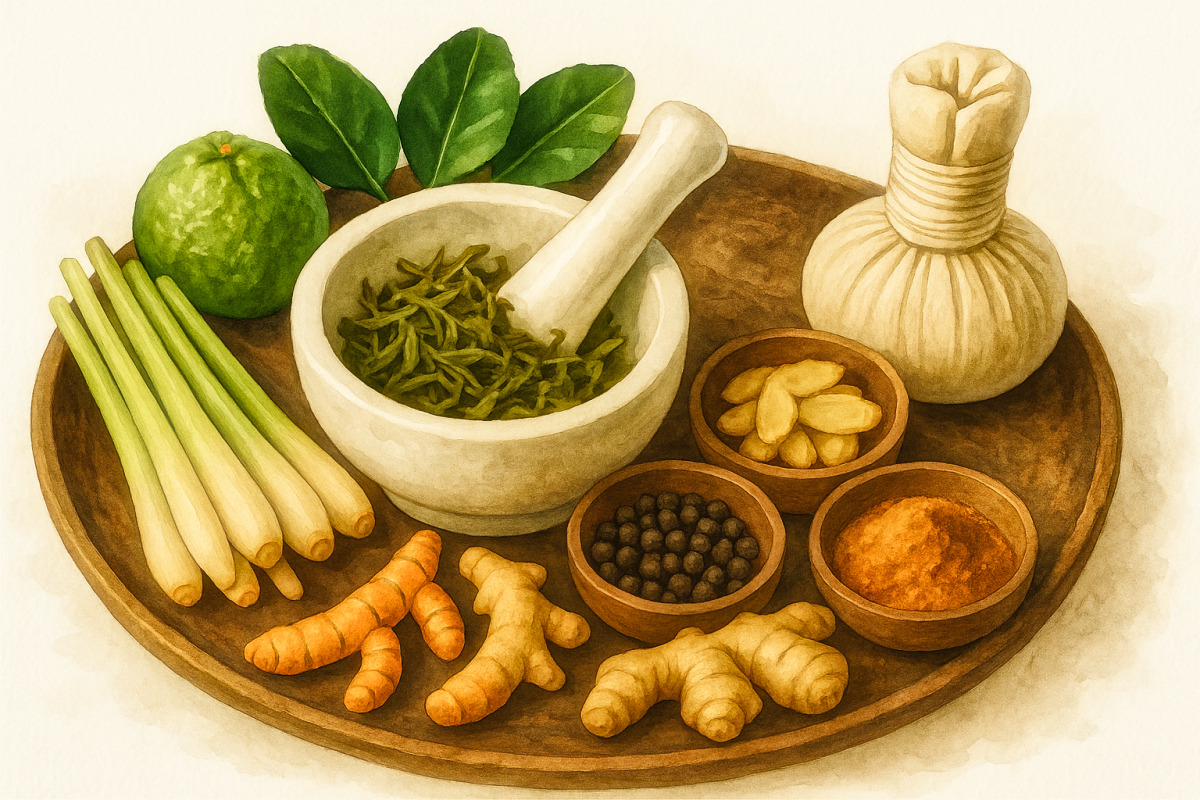
Try adding herbs and spices such as ginger, galangal, fingerroot, black pepper, garlic, cumin, cardamom, and chili to your meals. Traditional Thai dishes like tom yum and tom kha, along with recipes that use lemongrass, holy basil, and sweet basil, are excellent choices during the rainy season. These herbs help support the fire element, which, in Thai Traditional Medicine, helps move stagnant wind and maintain balance.
Herbal medicine can also be helpful. Different Thai herbal formulas are traditionally used for different types of wind imbalance. Some are traditionally used for muscle aches and body pain, others for bloating and indigestion, while still others are used to help clear blockages in different parts of the body. The right herbal formula depends on each person’s symptoms and overall balance.

Movement is also important. Stretching, yoga, Tai Chi, Qigong, and Thai hermit exercises (Rue Si Dat Ton) can help improve the circulation of both blood and wind throughout the body. Even a few simple stretches—such as lying on your back and stretching one leg at a time with a strap or towel around your foot, opening the hips and shoulders, or doing a gentle backbend—can help relieve stiffness and promote the healthy flow of blood and wind.
It is also worth avoiding habits that can create more wind in the body. These include suppressing natural urges such as urination or bowel movements, skipping meals, eating too quickly or without chewing well, staying up late, eating too many cold foods and drinks, consuming raw, fermented, processed, or difficult-to-digest foods, and eating excessive refined carbohydrates.
In Thai Traditional Medicine, emotions such as worry, fear, sadness, and overthinking are believed to disturb the wind element. At the same time, an imbalance of the wind element may also contribute to these emotions, creating a cycle that can be difficult to break. Taking time to rest, relax, and calm the mind is therefore an important part of maintaining balance and well-being.
Finally, remember that the rainy season is also a time when colds, flu, and other infections are more common. Wash your hands regularly, get enough sleep, and avoid crowded places whenever possible. By eating nourishing foods, staying warm, moving your body, getting enough rest, and practicing good hygiene, you can enjoy the rainy season while helping your body stay healthy, balanced, and resilient.
If you’d like to learn more about Thai Traditional Medicine and how it can support your health throughout the seasons, feel free to get in touch.